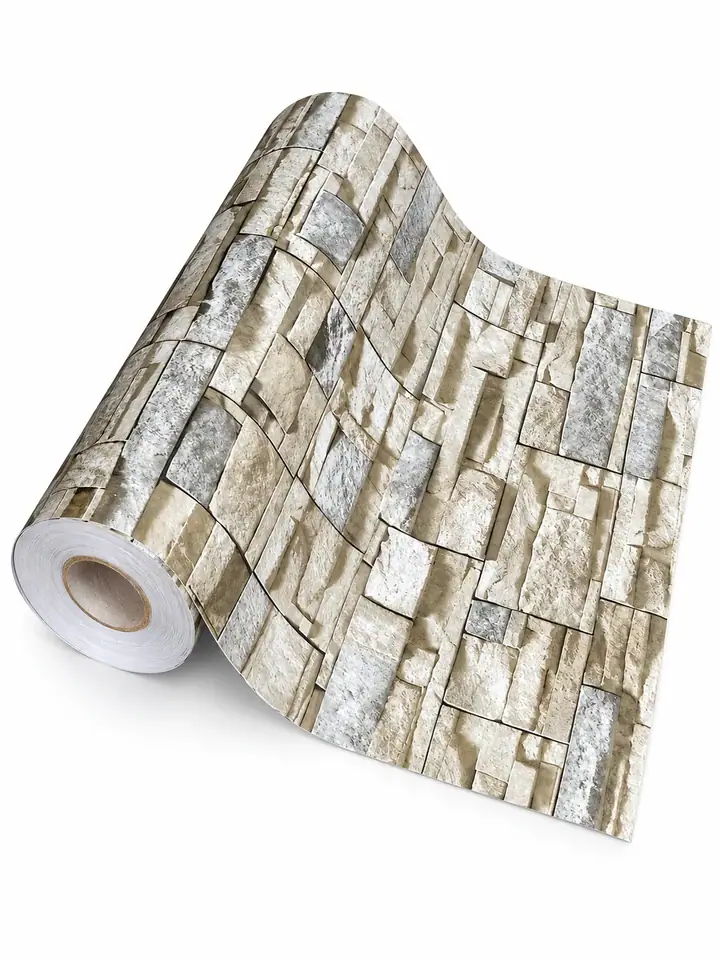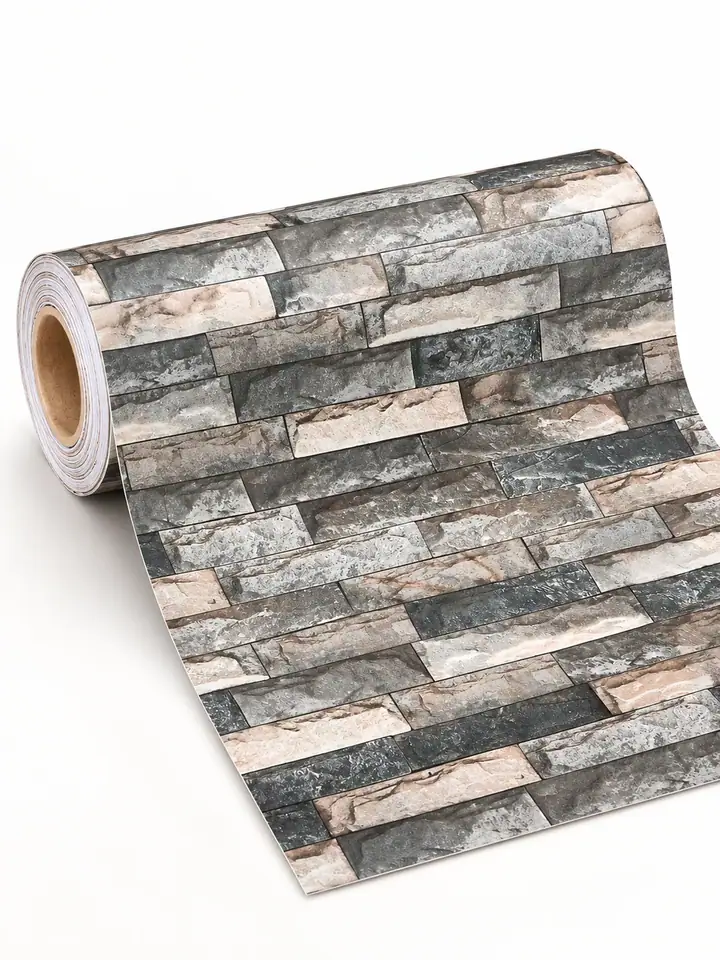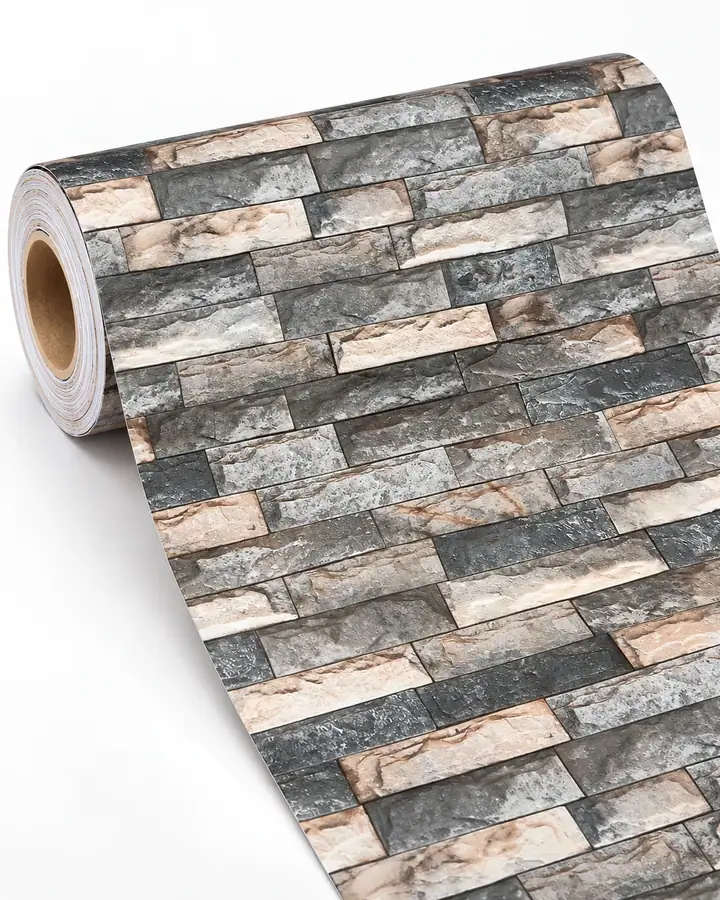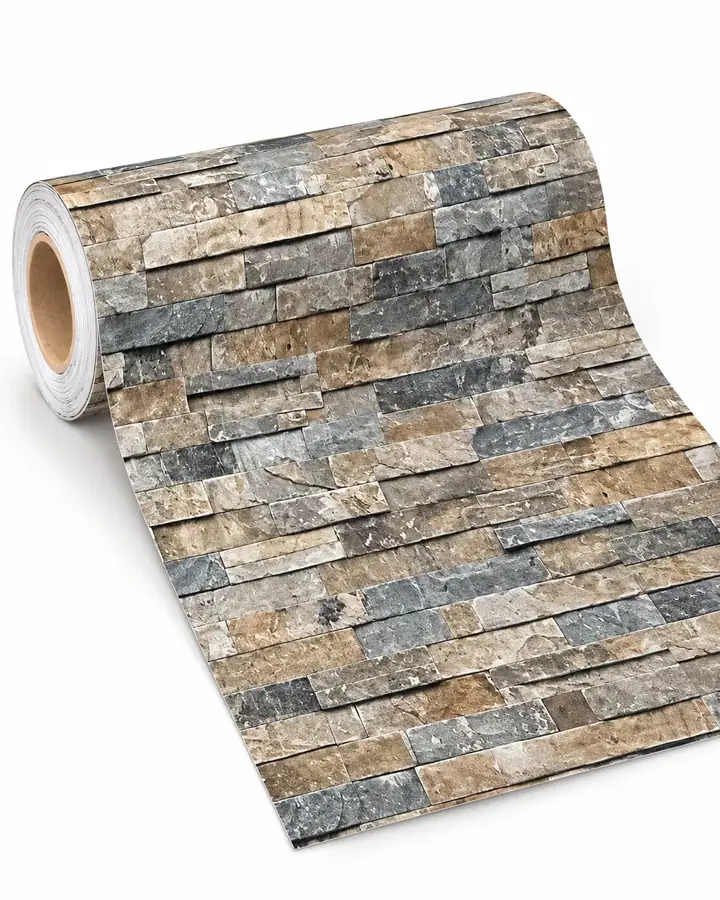
Key takeaways
- Rolls needed = (area to cover × (1 + waste allowance)) ÷ area of one roll, always rounded up.
- A 0.61 m × 3 m retail roll covers 1.83 m²; a 1.22 m × 50 m trade roll covers 61 m².
- Allow around 10% waste for plain films and 15% or more for patterns that need matching or for many small pieces.
- For cabinets, measure every door and panel face plus edges, not the footprint of the kitchen.
Under-order and the job stops while you wait for a second shipment — possibly from a different production batch, with a visible colour difference. Over-order and you carry stock you cannot sell. A few minutes of arithmetic avoids both.
Every product page on this site has a roll calculator that does this for you. Here is the method behind it.
The formula
Rolls needed = (area to cover × (1 + waste allowance)) ÷ area of one roll
Round the result up to the next whole roll.
Step 1: Know your roll size
Common roll formats in our range:
| Roll | Coverage |
|---|---|
| 0.61 m × 3 m (retail wallpaper) | 1.83 m² |
| 0.61 m × 5 m | 3.05 m² |
| 0.61 m × 50 m (trade) | 30.5 m² |
| 1.22 m × 50 m (furniture film, trade wallpaper) | 61 m² |
| 1.52 m × 15 m (TPU protection film) | 22.8 m² |
Step 2: Measure the area
Walls. Multiply width by height for each wall and add them together. Subtract large openings such as doors and windows. Leave small openings in — the offcuts rarely make up for them.
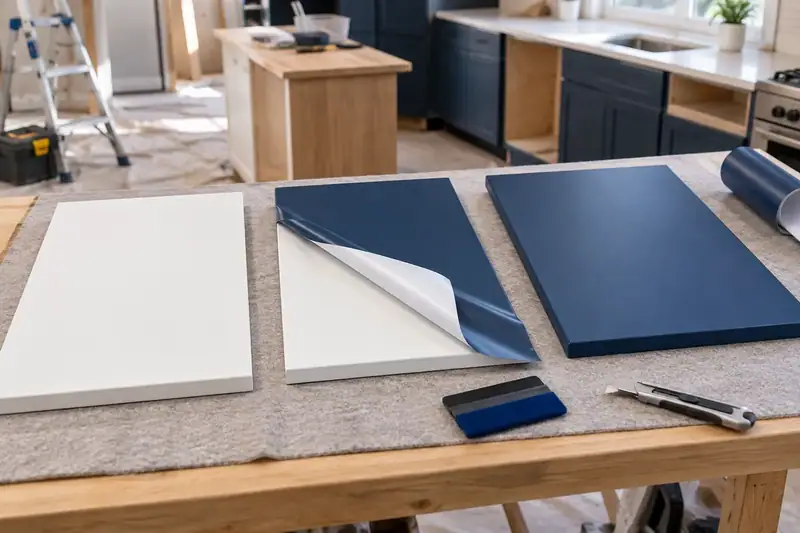
Cabinets. Measure each door and drawer front, and add the visible end panels. Add the edges: a 600 × 720 mm door with 18 mm edges needs an extra strip around its perimeter. For refacing, the face area is often more than buyers expect.
Floors. Multiply length by width of the room. Add the area of alcoves and door recesses.
Step 3: Choose a waste allowance
- About 10% — plain colours and solid films, large simple surfaces.
- About 15% — wood grain and marble where grain direction matters, and patterned wallpaper that must line up across joins.
- 20% or more — jobs with many small pieces, complex profiles or large pattern repeats.
Worked example 1: a feature wall
A feature wall is 4.2 m wide and 2.6 m high, with a patterned PVC wallpaper on 0.61 m × 3 m rolls.
- Area: 4.2 × 2.6 = 10.92 m²
- With 15% waste: 10.92 × 1.15 = 12.56 m²
- Roll coverage: 1.83 m²
- Rolls: 12.56 ÷ 1.83 = 6.86, so 7 rolls
Also check the drops: a 2.6 m wall fits one 3 m length per strip, and 4.2 m ÷ 0.61 m = 6.9 strips, so 7 rolls works in practice too.
Worked example 2: a kitchen refacing job
A contractor is refacing 14 doors and drawer fronts totalling 6.8 m², plus 1.6 m² of end panels and 0.9 m² of edges, using wood grain film on 1.22 m × 50 m rolls.
- Area: 6.8 + 1.6 + 0.9 = 9.3 m²
- With 20% waste (many small pieces, grain direction): 11.16 m²
- One roll covers 61 m², so 1 roll with plenty to spare
A contractor doing five similar kitchens a month would use roughly one 50 m roll per five to six kitchens.
Worked example 3: a pop-up shop floor
A 9 m × 6 m retail unit with self-adhesive vinyl flooring on 1.22 m × 50 m rolls.
- Area: 54 m²
- With 10% waste: 59.4 m²
- Rolls: 59.4 ÷ 61 = 0.97, so 1 roll — but with almost no margin. For a commercial job, order 2.
Buy for the whole job at once
Order all rolls for one project in a single batch. Different production runs can vary slightly in colour and gloss, and on a large wall or floor the difference shows.
Try the calculator
Open any product in the wallpaper and floor film range or the furniture film range and use the roll calculator beside the specifications. Then add the product to your quote list and send the enquiry — we will confirm quantities against the exact roll format.
Frequently asked questions
How do I calculate how many rolls of wallpaper I need?
Multiply wall width by height for each wall, subtract large openings, add a waste allowance of about 10–15%, then divide by the area of one roll and round up. A 0.61 m × 3 m roll covers 1.83 m².
How much waste should I allow for patterned film?
Allow about 10% for plain colours and 15% or more for wood grain, marble and repeating patterns that must be aligned across joins, and for jobs with many small pieces.
How many square metres is a 1.22 m × 50 m roll?
A 1.22 m × 50 m roll covers 61 m² before waste.

Written by the account managers and production staff at Guangdong Lizhou New Materials Technology Co., Ltd., who specify, coat and slit these films every day. Questions about this article go straight to them at sales@lizhou-material.com.