Key takeaways
- Self-adhesive PVC film refaces cabinets, doors and panels without stripping or repainting, which makes it fast for renovation and rental turnovers.
- Specify pattern, finish (gloss, matte, embossed), thickness and roll format together, and approve a physical sample before ordering.
- Surface preparation decides the result: clean, dry, smooth and grease-free substrates, with filled joints and rounded edges where possible.
- Order every roll for one project in a single batch to avoid colour variation between production runs.
Replacing a kitchen costs time, money and a skip. Refacing it with self-adhesive decorative film can transform the same cabinets in a day, at a fraction of the cost — which is why renovation contractors, landlords and furniture factories buy this material by the container.
The result depends on choosing the right film and preparing the surface properly. This is the checklist we walk through with buyers.
1. Choose the pattern family
Our furniture films come in four main series:
- Wood grain — oak, walnut, ash, rosewood, white-washed and rustic textures, in matte, high-gloss and embossed finishes.
- Marble and stone — white Carrara-style, black marble, grey veined and granite effects for worktops, splashbacks and wall panels.
- Solid colour and gloss — plain matte, high-gloss and pearlescent colours for modern handleless kitchens.
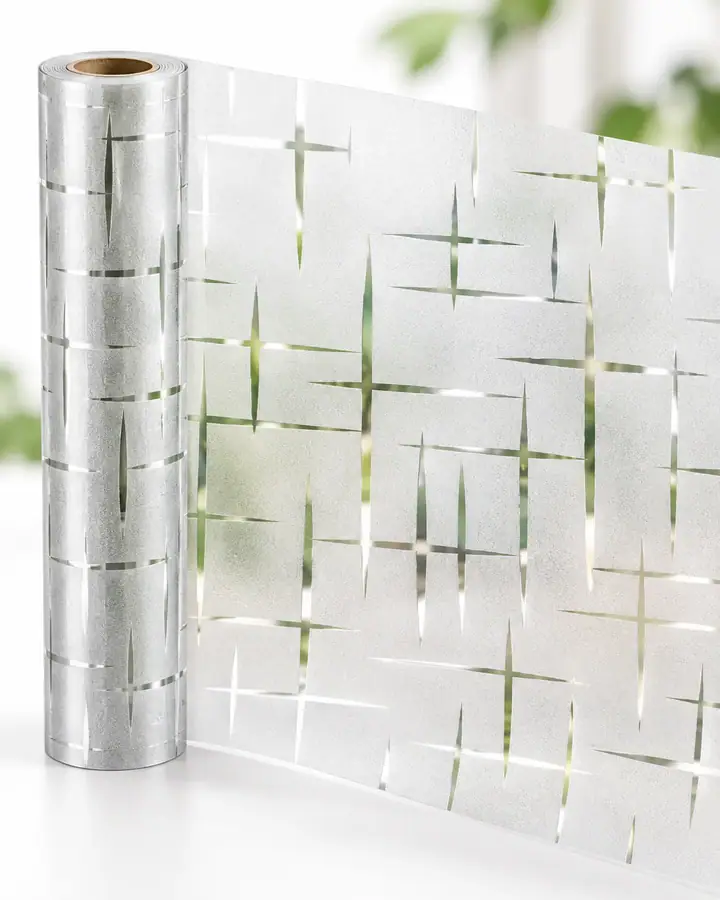
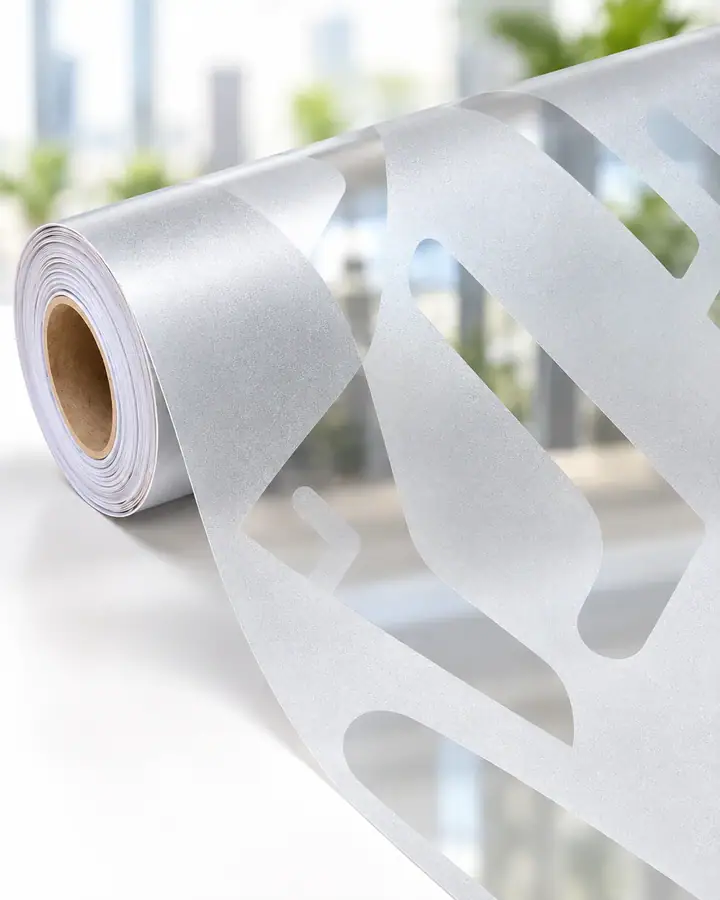
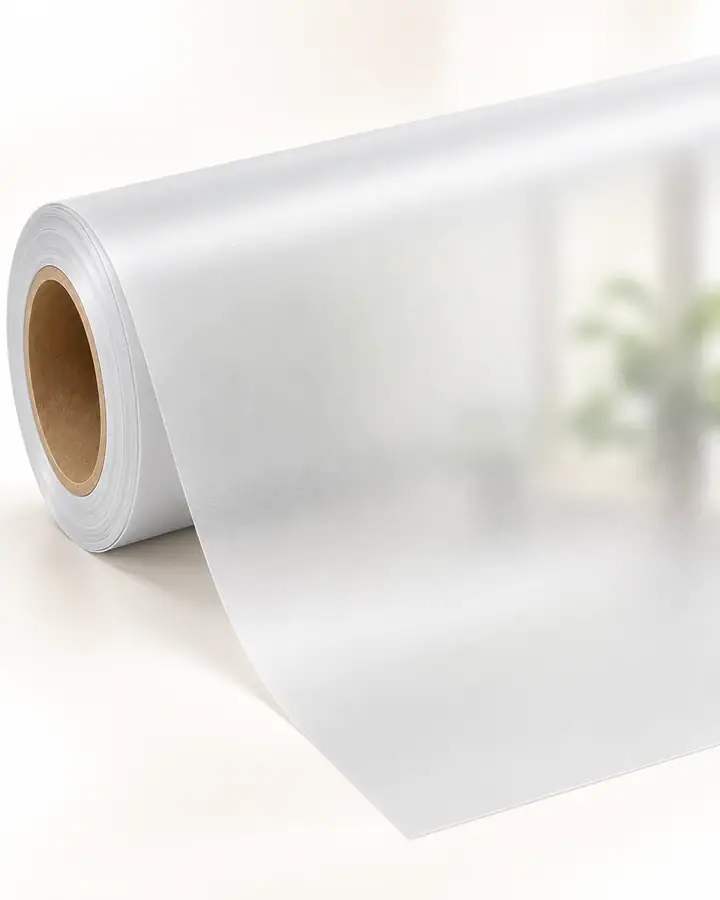
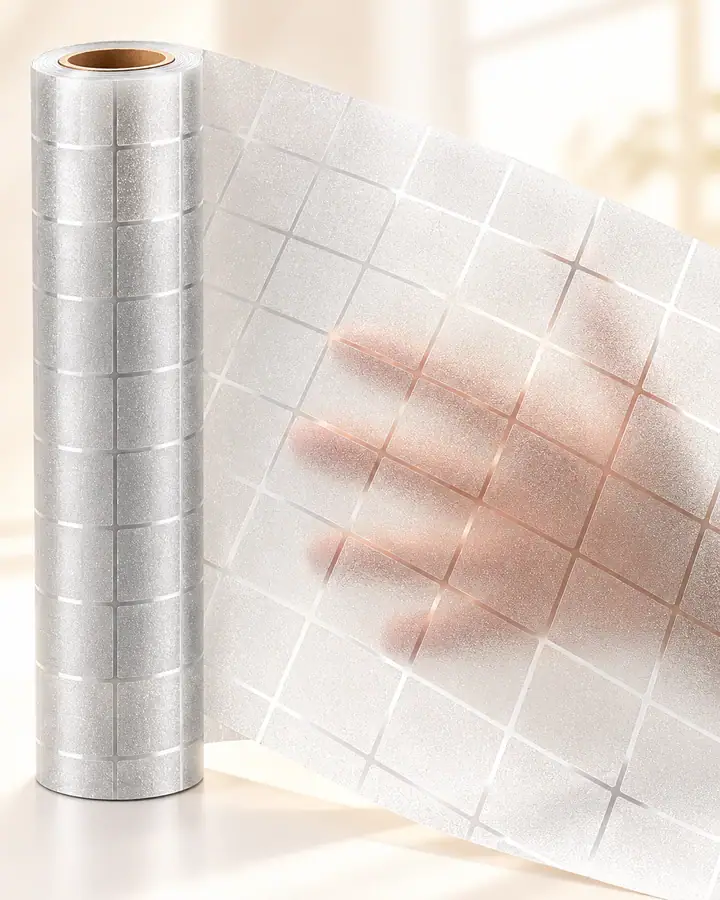
- Frosted glass — privacy and decorative films for glazed cabinet doors, partitions and windows.
For a coordinated refurbishment, many buyers combine a wood grain for doors with a solid colour for carcasses.
2. Choose the finish
- Matte hides fingerprints and minor surface imperfections, and reads as natural for wood.
- High-gloss suits modern kitchens but shows every flaw in the surface underneath, so it needs a very smooth substrate.
- Embossed finishes add a real tactile grain that makes wood and stone effects more convincing up close.
3. Confirm thickness and roll format
Our standard furniture film is around 0.5 mm thick on 1.22 m × 50 m rolls. The 1.22 m width covers most cabinet doors and wall panels without a seam. For factory panel lamination, we also produce thinner and thicker films to suit your laminating line — tell us your process and substrate.
Use the roll calculator on any product page to estimate how many rolls a project needs, including an allowance for pattern matching and offcuts.
4. Prepare the surface properly
Self-adhesive film reproduces the surface underneath it. Before application:
- Clean and degrease — kitchen cabinets carry a film of cooking grease that prevents adhesion. Use a degreaser, then wipe with clean water and let it dry.
- Repair — fill dents and chips, and sand any lifting or flaking finish.
- Smooth — sand glossy lacquered surfaces lightly so the adhesive has something to key into, and remove all dust.
- Prime porous surfaces — raw MDF and chipboard edges can absorb adhesive; a primer improves the bond.
- Check the environment — apply at normal room temperature; very cold substrates reduce initial tack.
5. Application tips for contractors
- Remove doors and hardware before wrapping.
- Peel the liner back gradually and squeegee from the centre outward.
- Use gentle heat from a heat gun to wrap film around edges and profiles, then press firmly.
- Trim with a sharp blade and change blades often.
- Keep film away from direct heat sources such as oven sides and kettle steam zones unless the grade is rated for it.
6. Order samples and buy in one batch
Always approve a physical sample under the lighting where it will be installed — wood and marble prints look different under warm and cool light. Then order everything for one project in one batch. Different production runs can vary slightly in colour, and a mismatch between two doors is obvious.
Customisation for distributors and factories
For production orders we offer colour matching to your sample, custom-printed wood grain and marble designs, embossing, custom widths, and private-label packaging with your logo on the core, label and carton. The MOQ for customised production is 100 rolls.
Explore home and furniture decorative films, or see how films are used in cabinet refacing projects. When you are ready, send us your specification for a quotation within 24 hours.
Frequently asked questions
Can you put self-adhesive film on kitchen cabinets?
Yes. Self-adhesive PVC decorative film is widely used to reface kitchen cabinet doors, carcasses and panels. The surface must be clean, dry, smooth and free of grease, and damaged or flaking finishes should be repaired first.
What thickness is furniture decorative film?
Lizhou's wood grain and marble furniture films are typically supplied at around 0.5 mm in 1.22 m × 50 m rolls. Thinner and thicker grades are available for panel lamination; ask for the thickness that suits your substrate and process.
Can you match a wood grain or colour to my sample?
Yes. Lizhou offers colour matching to customer samples and custom-printed wood grain and marble designs for production orders, with a standard MOQ of 100 rolls for customised production.

Written by the account managers and production staff at Guangdong Lizhou New Materials Technology Co., Ltd., who specify, coat and slit these films every day. Questions about this article go straight to them at sales@lizhou-material.com.