Key takeaways
- PU heat transfer vinyl is thinner, softer and stretchier than PVC, which is why it is the standard for performance fabrics and team jerseys.
- PVC HTV costs less and can be more opaque, so it still has a place on cotton bags, workwear and promotional items.
- Our PU grades transfer at 150–180 °C for 10–15 seconds; always confirm settings on your own press and fabric.
- For sportswear, test stretch recovery and wash-fastness on the actual jersey fabric before a full run.
Walk into any club shop at the start of a season and most of the names and numbers on the shelf were applied with heat transfer vinyl. Good HTV is invisible as a material: the print stays sharp, stretches with the shirt, and survives months of washing. Bad HTV cracks across the number after a few cycles and lifts at the edges.
The single biggest factor is the film itself, and the first decision is PU or PVC.
What is heat transfer vinyl?
Heat transfer vinyl (HTV) is a thin film with a heat-activated adhesive, supplied on a carrier sheet. You cut the design in reverse with a plotter, weed away the waste, then press the design onto fabric. Heat and pressure activate the adhesive; you then peel the carrier away, hot or cold depending on the grade.
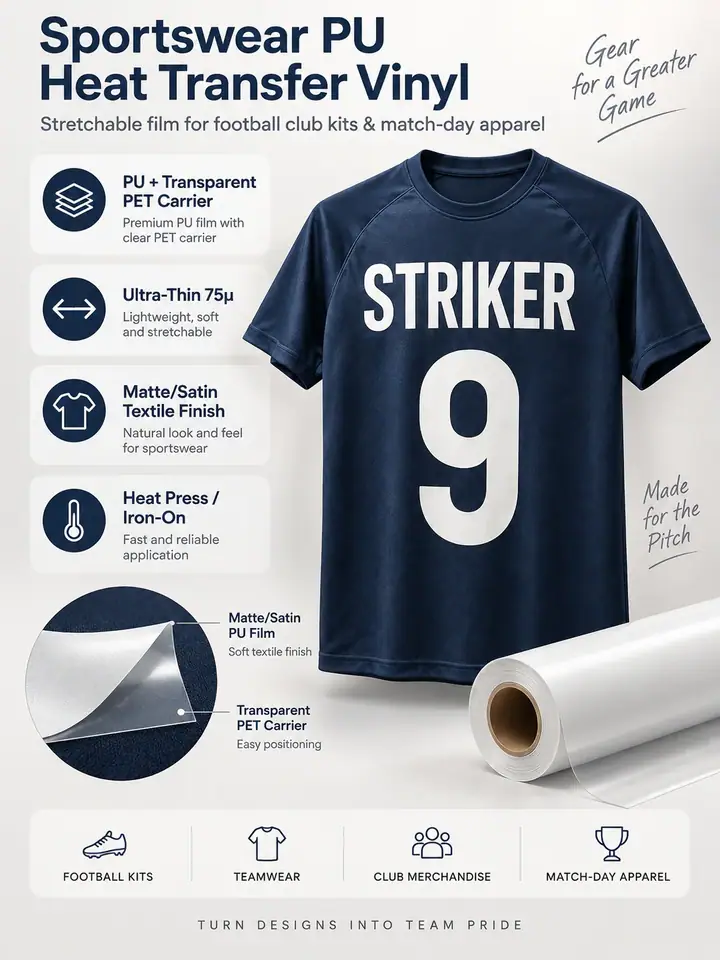
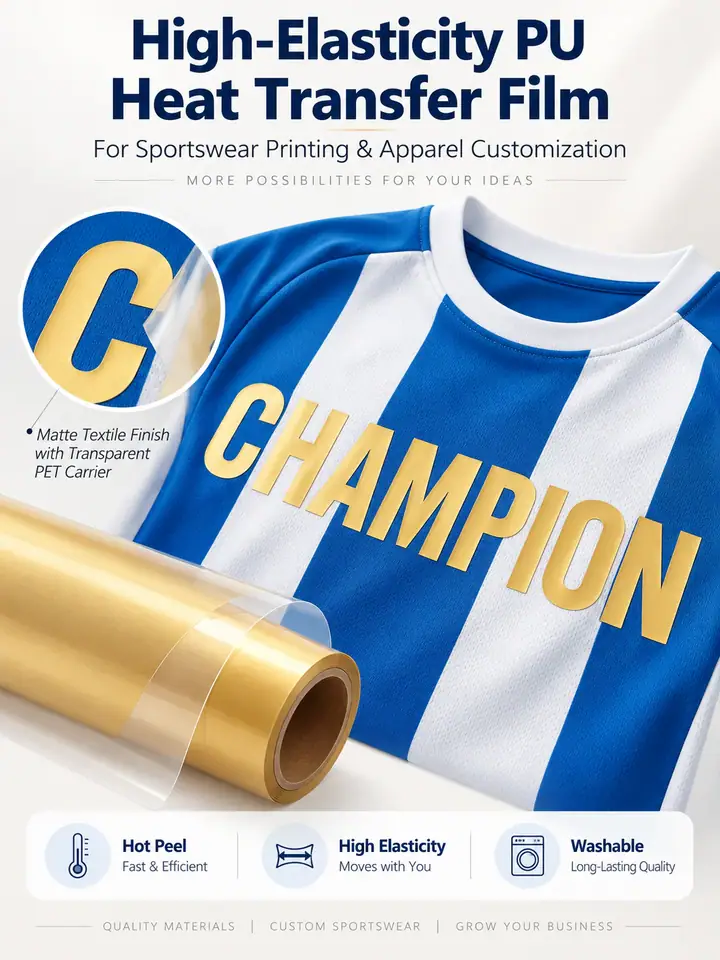
Our HTV uses a transparent PET carrier, which makes positioning on the garment easier because you can see exactly where the design sits.
PU or PVC: the core differences
PU (polyurethane) HTV
- Thinner — our ultra-thin sportswear grades are around 75 microns.
- Softer hand feel, so the print feels like part of the fabric.
- More elastic, so it recovers when the fabric stretches.
- Better suited to polyester, blends and performance fabrics.
PVC HTV
- Thicker and usually more opaque.
- Lower cost per metre.
- Stiffer, so better suited to cotton, canvas bags and promotional items that do not stretch much.
For team sportswear, PU is the default. A jersey is stretched every time it is pulled on and off, and a stiff film eventually cracks along the lines where the fabric works hardest.
Press settings
Our PU heat transfer vinyl grades are specified for:
| Setting | Value |
|---|---|
| Transfer temperature | 150–180 °C |
| Transfer time | 10–15 seconds |
| Application pressure | 0.3–0.5 MPa (medium) |
| Equipment | Cutting plotter plus flat heat press; roller transfer machines for some grades |
Treat these as a starting window, not a recipe. Heat presses vary in how evenly they heat, and synthetic fabrics can be sensitive to the top of the range. Run a test transfer on the real garment, wash it, and adjust before production.
What to ask an HTV supplier for sportswear
- Stretch and recovery. Ask for a high-elastic grade and test it by stretching a pressed sample repeatedly.
- Wash-fastness. Ask how the grade was tested and how many cycles it survived. Then wash your own sample at the temperature your customers will use.
- Hot or cold peel. Hot-peel grades are faster in production; cold-peel grades can be more forgiving on fine detail.
- Colour range. Club colours rarely match a standard chart exactly. Ask whether colour matching is available and at what volume.
- Weeding. Fine letters and outline numbers need a film that weeds cleanly at small sizes.
Matte, glossy or shimmer?
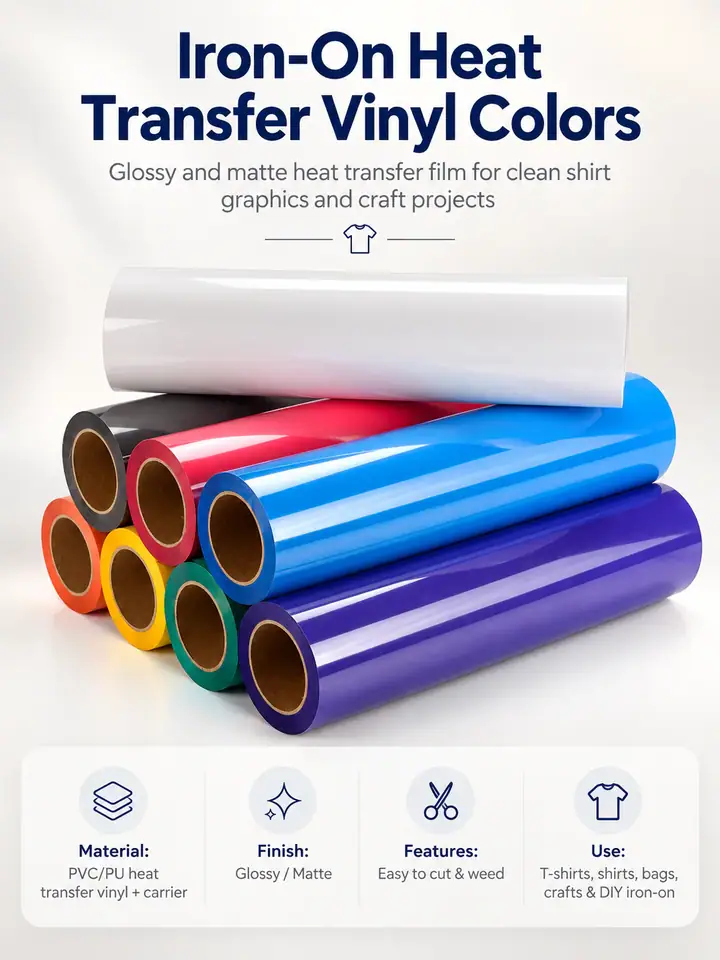
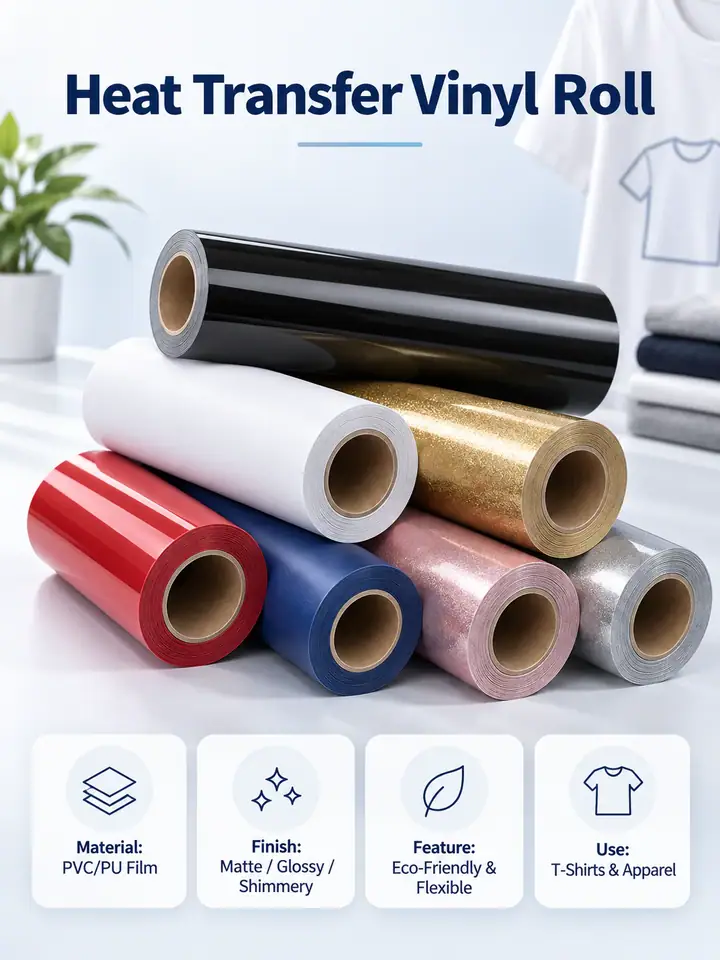
Professional kits mostly use matte or satin finishes, which read as premium on camera and under stadium lights. Glossy finishes suit fashion T-shirts and promotional wear. Shimmer and metallic finishes — including gold and silver — are popular for retail and fan merchandise.
Formats and ordering
- Widths: 0.5 m and 0.61 m (some grades also 0.305 m).
- Finishes: matte, glossy, shimmer, metallic.
- MOQ: from 1 roll for stock items; 100 rolls for custom colours.
- Lead time: 7–10 days for stock; 15–25 days for custom production.
See the full heat transfer vinyl range, including athletic-grade film for football club kits, or request free A4 samples to run your own wash test.
Frequently asked questions
Is PU or PVC heat transfer vinyl better for football jerseys?
PU heat transfer vinyl is usually the better choice for football and team jerseys. It is thinner and more elastic, so names and numbers move with stretchy polyester fabric and are less likely to crack after washing.
What temperature should heat transfer vinyl be pressed at?
Lizhou's PU HTV grades are specified for 150–180 °C for 10–15 seconds. Press temperature varies with fabric and equipment, so run a test transfer on the actual garment first.
Can heat transfer vinyl be cut on a Silhouette Cameo or Cricut?
Yes. Our HTV is supplied on a transparent PET carrier and is designed to cut and weed on standard desktop cutting plotters, including Silhouette Cameo-class machines, as well as professional plotters.

Written by the account managers and production staff at Guangdong Lizhou New Materials Technology Co., Ltd., who specify, coat and slit these films every day. Questions about this article go straight to them at sales@lizhou-material.com.